
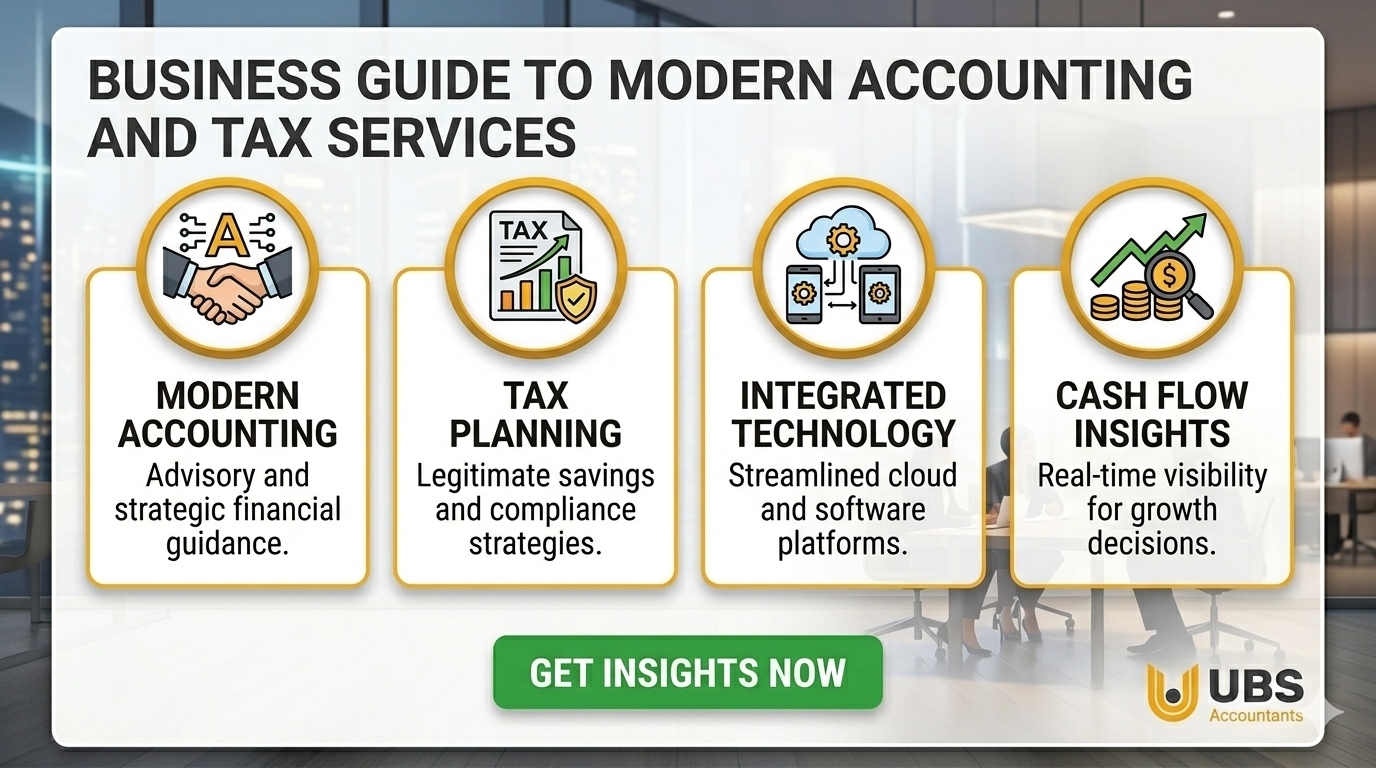
The right accounting and tax services do far more than keep you compliant they actively reduce your tax liability, improve cash flow, and give you the financial clarity to grow with confidence.
This guide covers everything a business owner needs to know, from core services and what to expect from a modern provider, to cost, red flags, and how to choose the right fit.
What Modern Accounting and Tax Services Actually Do for Your Business
Most business owners underestimate the scope of professional support available to them.
Beyond lodging a tax return once a year, a strong provider manages your compliance calendar, monitors your financial position in real time, and advises you before problems arise — not after. When done properly, your business taxation obligations become a managed, predictable part of operations rather than an annual scramble.
The businesses that consistently pay less tax and avoid ATO penalties are not luckier than others. They simply have better systems and professionals working with them year-round.
Core Services Every Business Needs
These are the non-negotiables the foundation that every business, regardless of size or structure, must have in place.
Bookkeeping and Financial Record-Keeping
Accurate, up-to-date books are the starting point for every other financial decision. Clean records mean cleaner BAS lodgements, more legitimate deductions, and no surprises when the ATO reviews your accounts. Cloud tools like Xero and MYOB make this faster and more reliable, but they still require professional oversight to ensure data is coded correctly.
BAS, GST, and Tax Compliance
Every registered business must lodge Business Activity Statements on time and ensure GST is remitted accurately. Errors here are among the most common and most expensive mistakes small businesses make. Professional business accounting supportremoves this risk by managing reconciliations and lodgements as part of a structured compliance calendar.
Payroll, PAYG, and Superannuation
Payroll is a governance obligation, not just an admin task. PAYG withholding must be reported through Single Touch Payroll, and superannuation must be paid on time late super is not tax deductible and triggers the Superannuation Guarantee Charge. Getting this right protects both your business and your staff.
Annual Tax Returns and Proactive Tax Planning
Tax returns are the minimum. What separates good providers from great ones is proactive planning reviewing your taxable income, deductible expenses, and business structure before the financial year closes, so there is still time to act on the advice.
This ensures you can legally implement proven small business tax savings before the financial year closes.
What Separates Modern Tax and Accounting Services from Outdated Ones
The benchmark for tax and accounting services has shifted significantly. A once-a-year conversation and a retrospective return are no longer enough for a business that wants to grow.
Real-Time Reporting vs. Year-End Surprises
Modern providers give you monthly or quarterly visibility over your profit and loss, cash flow, and tax position. You should never be blindsided by a large tax bill that could have been forecast and managed weeks earlier.
Proactive Tax Planning vs. Reactive Compliance
Reactive accounting records what happened. Proactive accountant and tax services shape what will happen reviewing your business structure, timing asset purchases, planning director remuneration, and identifying deductions before the financial year ends.
Strategic Advisory: When Your Accountant Becomes a Business Partner
The most valuable providers help you read your numbers, understand your margins, and make structuring decisions that protect your assets.
Businesses in New South Wales and South Australia benefit from specialist providers offering Sydney business tax servicesand localized Adelaide accounting services to get strategic support at the right price point.
Businesses in New South Wales and South Australia benefit from specialist providers offering Sydney business tax services and Adelaide business taxation local, strategic support at the right price point.
Accounting and Tax Services by Business Type
The right support depends on your structure, revenue, and stage of growth. Not every business needs the same level of service.
Sole Traders
Small business tax and accounting services for sole traders typically cover income tax, GST registration, BAS lodgements, and deductible expenses.
The priority is clean records and a proactive tax plan that keeps you from overpaying proving there is still an immense gap in what a tax advisor can do that software cannot capture.
Partnerships and Trusts
These structures introduce trust resolutions, distribution planning, and partnership tax returns. Getting the structure right from the start saves significant cost and complexity later. Understanding the full scope of what a business services accountantcovers here is essential before you commit to any structure.
Small Companies and Growing Businesses
Companies require ASIC compliance, director obligations, and Division 7A management.
Businesses scaling up benefit most from incorporating smarter tax and accountancy tipsthat directly connect day-to-day financial reporting to long-term strategy, pricing, and expansion decisions.
For South Australian businesses, Adelaide accounting services provide state-specific compliance support including payroll tax management.
How to Choose the Right Provider
Choosing a provider is one of the most consequential decisions you will make. The wrong fit costs you more than their fee it costs you missed deductions, poor advice, and compliance risk.
What Good Accounting and Tax Services Should Include
A quality provider offers a structured compliance calendar, proactive tax planning before 30 June, regular management reporting, and clear communication. They should be registered with the Tax Practitioners Board and have demonstrable experience with businesses of your size and industry.
Red Flags That Your Current Provider Is Falling Short
Be concerned if your accountant only contacts you near a deadline, cannot explain your financials clearly, has never discussed your business structure, or has never raised a tax saving strategy unprompted. These are signs of a reactive, compliance-only relationship and it is costing you money.
What Small Business Tax and Accounting Services Typically Cost
A basic annual tax return for a sole trader starts from around $400–$600. Comprehensive monthly services bookkeeping, BAS, payroll, and advisory typically range from $300 to $1,500 per month depending on complexity.
The better question is not what accounting and tax services cost, but what poor accounting is already costing you. Missed deductions, ATO penalties, and late super charges almost always exceed the cost of a professional. Most businesses recover the fee within the first year through tax savings alone.
Common Mistakes Businesses Make Without Professional Support
- Mixing personal and business finances, which inflates taxable income and creates bookkeeping chaos.
- Missing BAS deadlines, triggering automatic ATO penalties and interest.
- Not setting aside funds for GST and income tax, creating cash flow crises when payment falls due.
- Staying in the wrong business structure as the business grows, and paying far more tax than necessary.
- Claiming deductions without proper records, leaving the business exposed during an ATO audit unless you hire a qualified chartered tax advisor to protect your revenue
Whether you are just starting out or looking to optimise a growing business, the difference between average and excellent support is measured in real dollars. Talk to the team at UBS Accountants to find out exactly where your business stands and what smarter tax and accounting could save you this financial year.
Final Thoughts
Modern accounting and tax services are not a compliance cost they are a business asset.
The right provider gives you cleaner records, lower tax bills, better decisions, and the confidence to scale without financial blind spots.
UBS Accountants helps businesses across Australia build exactly that kind of financial foundation, every single year.
Frequently Asked Questions
What do accounting and tax services include for a small business?
For most small businesses, they cover bookkeeping, BAS and GST lodgements, income tax returns, payroll and superannuation management, and tax planning. More comprehensive packages include management reporting, business structuring, and strategic advisory.
How often should I engage professional support?
Ongoing not just once a year. Monthly or quarterly engagement gives you real-time financial visibility and ensures issues are caught before they become costly. At a minimum, engage a professional before every BAS lodgement and well before 30 June each year.
What is the difference between a bookkeeper and an accountant?
A bookkeeper records daily transactions and keeps your records current. An accountant uses that data for tax planning, compliance, strategic advice, and financial reporting. Bookkeeping builds the foundation; accounting builds on it.
Are accounting and tax service fees tax deductible?
Yes. Fees paid for managing your tax affairs and accounting are fully deductible business expenses under Australian tax law — meaning the real cost of professional support is reduced by your marginal tax rate.
What should I look for in a modern provider?
Look for proactive communication, registered tax agent status, cloud accounting capability, and a track record of structural and tax-strategy advice not just return lodgements.
Ask directly: “What have you done to reduce a client’s tax bill in the last 12 months?”