
The businesses that pay less tax and grow faster are not luckier they simply manage their tax and accountancy smarter. Whether you run a sole trader operation or a growing small company, the right habits save you thousands and keep you legally protected every financial year.
Here is everything you need to know, structured so you can act on it today.
Why Tax and Accountancy Matter More Than Most Business Owners Realise
Poor tax and accounting management is one of the top reasons small businesses run into cash flow problems not poor sales.
Getting yourbusiness taxation right from the start means fewer surprises at the end of the financial year, more money staying in your business, and less stress dealing with the ATO.
Many business owners only think about tax when it is already due. That reactive approach costs them deductions they could have claimed, penalties they could have avoided, and opportunities a proactive professional utilizing modern accounting practices would have caught months earlier.
Smart tax and accountancy is a year-round discipline, not a once-a-year scramble.
Start with the Right Foundation: Business Structure and Accounting Setup
How Your Business Structure Affects Your Tax and Accounting Obligations
Your structure sole trader, partnership, company, or trust directly determines how much tax you pay and what you must report. A sole trader structure is simple but offers limited tax planning flexibility.
A company structure typically attracts a flat corporate tax rate, which can be more efficient as profits grow. Reviewing your structure every few years withprofessional accounting supportis one of the highest-return decisions you can make.
Separating Business and Personal Finances
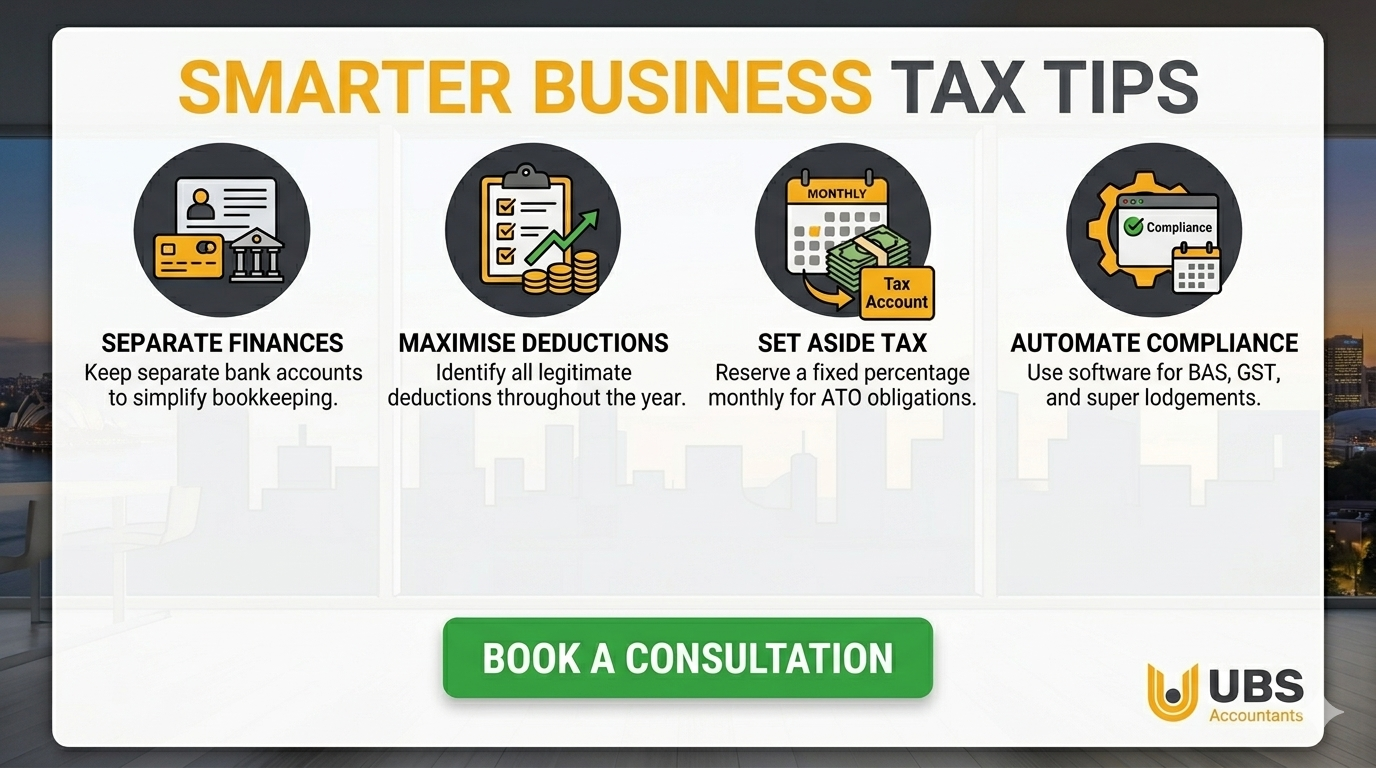
Open a dedicated business bank account on day one. Mixing personal and business money makes bookkeeping inaccurate, inflates your tax liability, and creates red flags during an ATO audit. This single habit makes every other part of your tax and accountancy process cleaner and faster.
Choosing the Right Accounting Software
Cloud tools like Xero, MYOB, and QuickBooks automate bank reconciliation, GST tracking, payroll, and BAS preparation. They also give you real-time visibility into cash flow something spreadsheets simply cannot match once your business starts growing.
Smart Tax Planning Tips Every Business Should Use Year-Round
Maximise Your Deductible Expenses
Every dollar of legitimate deductions reduces your taxable income. Common deductions business owners miss include home office costs, professional subscriptions, marketing spend, vehicle logbooks, and professional development.
No receipt means no deduction so build a system for capturing expenses as they happen to capitalize on hidden small business deductions before the year ends.
Depreciation and Instant Asset Write-Off
When your business purchases equipment, vehicles, or technology, you may be eligible to write off the full cost immediately through the instant asset write-off scheme, rather than depreciating it over several years. This is one of the most underused advantages in small business tax and accountancy. Speak to a registered tax agent before making large purchases to confirm eligibility.
GST, BAS, and PAYG Staying Compliant Without the Stress
Missing a BAS lodgement or PAYG instalment triggers automatic penalties. The simplest fix is to set calendar reminders for every quarterly deadline and automate your GST tracking through accounting software. If your business is registered for GST, ensure your invoices always show the correct GST amount and your records reconcile before every lodgement date.
Set Aside Money for Tax Every Month
Transfer a fixed percentage of every payment you receive into a separate tax savings account. Many small business owners are blindsided by a large tax bill because they spent their revenue without accounting for what the ATO is owed. This one habit eliminates that problem entirely.
Accountancy Best Practices That Grow Your Business
Review Your Financials More Than Once a Year
Your profit and loss statement, balance sheet, and cash flow report together tell the real story of your business health. Reviewing them monthly not just at tax time helps you spot rising costs, declining margins, and overdue receivables before they become serious problems. This is where consistent professional accounting guidance delivers the most ongoing value.
Invoicing and Getting Paid on Time
Late payments destroy cash flow. Set clear payment terms on every invoice (14 or 30 days), use automated invoice reminders through your accounting software, and follow up on overdue accounts consistently. A business can be profitable on paper and still fail because customers are not paying on time.
Payroll, Super, and Employee Tax Obligations
If you have employees, superannuation must be paid on time late super contributions are not tax deductible and attract the Superannuation Guarantee Charge. PAYG withholding must be reported and remitted accurately through Single Touch Payroll. These obligations are non-negotiable, and errors here draw ATO attention quickly, which is why many scaling companies rely on a qualified tax consultantto manage risk.
Affordable Tax and Accounting Strategies for Small Businesses
Good tax and accountancy support does not have to be expensive. For businesses in Sydney and Adelaide, local specialists in Sydney business taxation, Adelaide taxation services, Sydney accounting, andAdelaide accountingoffer targeted support without the overhead of large firms.
The real question is not what an accountant costs it is what poor accounting and missed deductions are costing you right now. Most business owners who engage professionaltax and accounting professionals recover their fees many times over in tax savings and penalty avoidance within the first year.
Common Tax and Accountancy Mistakes Businesses Make
The most costly mistakes in small business tax and accountancy are almost always avoidable:
- Missing deductions because receipts were not kept or expenses were not categorised correctly.
- Late lodgements that trigger ATO penalties and interest charges, both of which are not tax deductible.
- Wrong business structurestaying as a sole trader when a corporate structure would minimize your rates as profits grow. If you are unsure where you stand, speaking to a local expert about NSW tax optimizationor SA lodgement strategies can clarify your options.
- Not reviewing annually tax laws, thresholds, and available concessions change each financial year. What applied last year may not apply today.
Whether you are just starting out or looking to optimise a growing business, the right accounting and tax strategy changes everything.
Book a consultation with the team at UBS Accountantsand find out exactly where your business stands and what you could be saving.
Final Takeaway
Smart tax and accountancy is not just about staying compliant it is about keeping more of what your business earns and building a financial foundation that supports real growth. Start with clean records, stay across your obligations, claim every deduction you are entitled to, and work with professionals who understand your goals.
UBS Accountants helps businesses across Australia do exactly that, every financial year.
Frequently Asked Questions
What is the difference between tax and accountancy services?
Tax services focus on compliance, lodgements, deductions, and minimising your tax liability. Accountancy covers the broader management of your financial records, reporting, and business advisory. Most small businesses need both working together for the best outcome.
How often should a small business review its accounts?
Monthly at a minimum. Cash flow and profit and loss should be checked regularly so you can catch problems early and make informed decisions throughout the year not just at tax time.
What records do I need to keep for tax purposes?
The ATO requires you to keep records for five years. This includes invoices, receipts, bank statements, payroll records, and asset purchase documents. Digital record-keeping through accounting software satisfies this requirement.
When should a small business hire a professional accountant?
From day one, ideally. At a minimum, engage a professional before your first BAS lodgement, before hiring employees, and whenever you are considering a major purchase or change in business structure.
What are the most common tax deductions for small businesses?
Motor vehicle expenses, home office costs, professional fees (including accounting fees), marketing and advertising, equipment depreciation, training and professional development, and business insurance premiums are among the most commonly claimed — and most commonly missed deductions.