
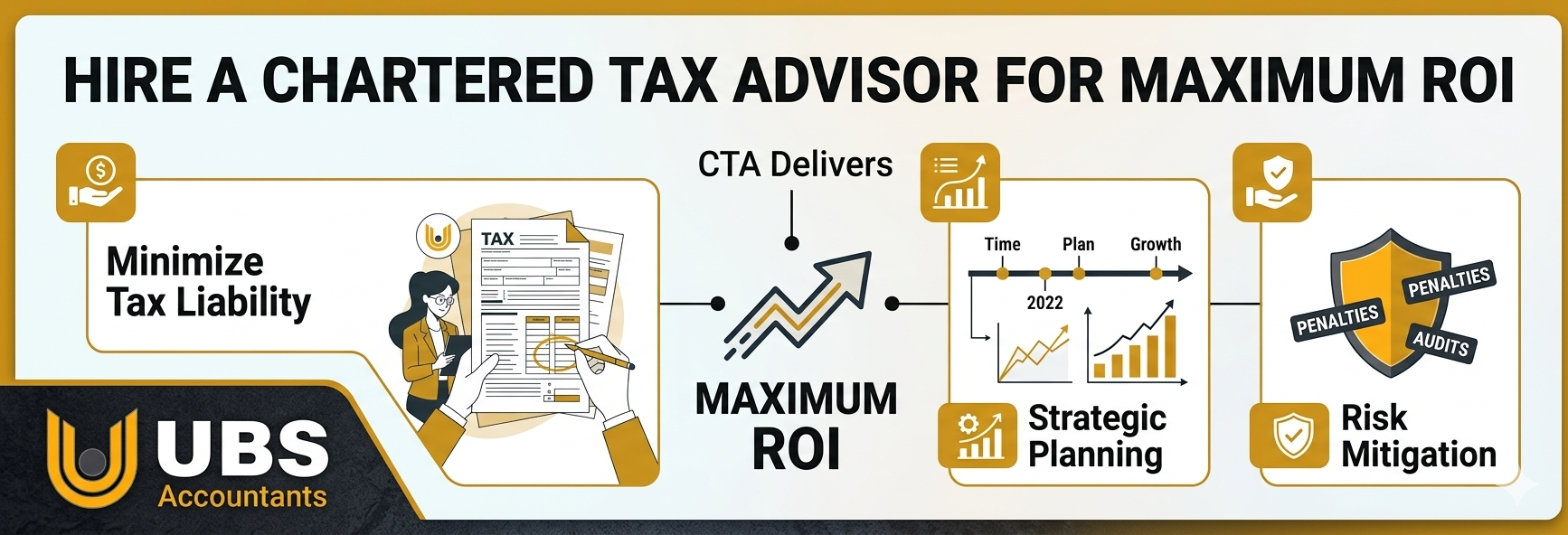
Most people pay more tax than they legally need to. Not because the rules are unfair but because they do not have the right person reading them.
A chartered tax advisor is someone who combines deep knowledge of Australian tax law with a professional qualification that holds them to a higher standard than most.
If you want maximum return on every dollar you earn, this is where to start.
What Is a Chartered Tax Advisor and Why Does the Title Matter?
A chartered tax advisor is a qualified professional who holds advanced accreditation in taxation typically through Chartered Accountants ANZ (CA ANZ) or CPA Australia and is registered with the Tax Practitioners Board (TPB) to legally provide tax advice and lodge returns on your behalf. The chartered designation is not a marketing term. It means the advisor has completed rigorous study, passed professional exams, and is required to maintain ongoing education to keep their licence.
If you want to understand the full range ofregisteredtax planning and compliancethat covers what a properly credentialled advisory practice looks like from the ground up.
The title matters because it signals accountability. Any person can call themselves a tax consultant.
A chartered tax advisor is bound by a code of ethics, required to carry professional indemnity insurance, and subject to disciplinary action if they give negligent advice.
That is a meaningful difference when your financial position is on the line, especially when comparing a professional’s deep oversight against what a tax advisor can do that software cannot replicate for complex returns.
What Qualifications Should You Look For?
In Australia, the strongest signals of a genuinely qualified chartered tax advisor are: CA ANZ membership (Chartered Accountants Australia and New Zealand), CPA Australia membership, registration with the Tax Practitioners Board, and ideally a specialisation in the type of tax most relevant to your situation business tax, individual returns, property, or SMSFs.
Ask any advisor you are considering for their TPB registration number. Every legitimate registered tax agent has one and will share it without hesitation. If they hesitate, that tells you something.
When you speak with a chartered tax advisor, they should be comfortable discussing:
Division 7A loans, capital gains tax (CGT) concessions for small business, the instant asset write-off, concessional and non-concessional super contributions, trust distribution resolutions, fringe benefits tax (FBT) obligations, and negative gearing. These are the working vocabulary of genuine tax expertise not terms a generalist drops casually.
Chartered Tax Advisor vs Chartered Accountant What Is the Actual Difference?
This is one of the most common points of confusion and it is worth being precise about. A chartered accountant (CA) is qualified across a broad range of financial disciplines: audit, financial reporting, management accounting, and taxation.
A chartered tax advisor focuses specifically on tax both in depth of knowledge and in how they spend their time serving clients.
Where They Overlap
Both hold professional qualifications. Both are bound by codes of ethics. Both can lodge tax returns and provide tax advice if registered with the TPB. Many chartered accountants are also strong tax advisors, and many chartered tax advisors hold CA or CPA designations. The overlap is real.
Where They Diverge and Why It Matters for ROI
A chartered accountant who works across audit, financial reporting, and business advisory has time divided across many disciplines.
A chartered tax advisor spends almost all of their professional time in tax reading ATO rulings, reviewing case law, tracking legislative changes, and building tax strategies for clients. That concentration of focus produces better financial outcomes for most people by ensuring your daily operations perfectly align with modern accounting and tax services.
If your primary need is reducing your tax bill and maximising what you keep, a specialist beats a generalist almost every time.
A Practical Example of the Difference
A construction business owner used a general chartered accountant for six years.
Returns were lodged correctly. No penalties. When they finally consulted a chartered tax advisor, the advisor identified that the business had never accessed the small business CGT concessions it was eligible for, had not used a trust structure that would have split income across a lower-taxed family member, and had missed depreciation claims on tools purchased before the instant asset write-off threshold was raised.
The compounded missed savings across those six years exceeded $60,000. Compliance without strategy is a slow and invisible cost.
How a Chartered Tax Advisor Delivers Real ROI
A chartered tax advisor delivers return on investment through a combination of legal tax reduction, risk avoidance, and decisions made at the right time of year not just at return time. Here is how each of those works in practice.
Legal Tax Reduction What This Actually Involves
Tax reduction is not avoidance. It is using the rules that exist exactly as Parliament intended.
A chartered tax advisor reads the tax legislation, the ATO’s administrative guidance, and relevant case law to find every legitimate position available to you.
This includes: income splitting through trusts or spousal structures, timing of income recognition and deductible expenditure, accessing small business entity concessions, using super contributions to reduce assessable income, and structuring your business to access the lower corporate tax rate. If you are in Sydney, the team providing business taxation advisory services across Sydneyapplies exactly this approach deep legislative knowledge applied to your specific numbers.
Risk Avoidance The Silent Half of ROI
Every ATO audit costs money even when you are found to be correct. The time, professional fees, and disruption are real costs. A chartered tax advisor reduces your audit risk by ensuring your positions are defensible, your records support your claims, and your return does not flag the patterns the ATO targets each year.
Avoiding one audit across ten years can save more than the total advisory fees paid in the same period.
Where Most Money Is Left on the Table
Tax decisions made after June 30 are almost always sub-optimal. The ones made in April and May when there is still time to purchase assets, make contributions, restructure income, or issue trust distributions — are where the real savings happen.
Understanding when to bring in a tax consultantexplains the timeline in practical terms. The same principle applies nationally: the earlier in the year you engage, the more your advisor can do.
Year One vs. Year Three Why the ROI Compounds
In year one, a chartered tax advisor typically catches what has been missed: unclaimed deductions, wrong structure, missed write-offs. In year two, they build on that by introducing smarter tax and accountancy tips into your ongoing corporate strategy.
By year three, the plan is running contributions are timed, purchases are planned, distributions are structured. The clients who report the highest ROI from professional tax advice are almost always the ones who have maintained the relationship for three years or more.
How to Find a Chartered Tax Advisor Who Is Right for Your Situation
To find a chartered tax advisor in Australia, start with the Tax Practitioners Board register at tpb.gov.au every registered tax agent is listed there.
Cross-reference with CA ANZ’s member directory or CPA Australia’s find-a-member tool. Then look for someone with experience in your specific situation: business tax, property investment, SMSF, or individual returns.Breakdown of what software misses is also a useful frame for understanding what to look for in the first conversation.
Questions That Reveal Whether Someone Is Genuinely a Specialist
• What ATO focus areas are you watching this financial year?
• What small business concessions have you accessed for clients recently?
• How do you approach trust distributions before June 30?
• Can you walk me through a tax strategy you built for a business like mine?
These questions require real knowledge to answer well. Vague answers are a reliable signal that the depth you need is not there.
What to Expect in the First Meeting
A good chartered tax advisor will ask more questions than they answer in the first session.
They want to understand your income sources, your business structure, your assets, your family situation, and your financial goals.
That context shapes everything that follows. If the first meeting feels like a form-filling exercise, it probably is.
For business owners and investors based further south, Adelaide taxation advisory servicesfollow the same chartered advisory model — local knowledge, nationally qualified advisors, year-round engagement rather than annual lodgement.
If you have never had a structured tax review with a qualified specialist, you almost certainly do not know what you are leaving behind each year. Book a consultation with our chartered tax advisorsand get a clear picture of your current tax position, what is being missed, and what a properly structured plan would look like going forward.
Final Word
Hiring a chartered tax advisor is not a cost — it is one of the highest-return financial decisions a business owner or investor can make. The difference between a compliant return and a strategically planned tax position compounds every year.
This post covered what the chartered designation actually means, how a chartered tax advisor differs from a general accountant, what genuine ROI looks like in practice, and how to find the right specialist for your situation.
UBS Accountants works with Australian individuals and businesses to build tax positions that improve year after year not just returns that clear the ATO’s bar. If your current advisor is not talking to you about strategy, structure, and timing, a conversation with a chartered tax advisor will show you exactly how much that silence has been costing.
FAQs
What is a chartered tax advisor in Australia?
A chartered tax advisor is a tax specialist who holds an advanced professional qualification typically through CA ANZ or CPA Australia and is registered with the Tax Practitioners Board to provide tax advice and lodge returns.
The chartered designation requires rigorous training, ongoing education, and adherence to a professional code of ethics.
Is a chartered tax advisor better than a regular tax accountant?
For complex tax situations business income, investment properties, trusts, or significant assets, yes.
A chartered tax advisor specialises in tax strategy, not just compliance. For a simple salary return with no investments, the difference may be minimal. As your situation grows, the gap in outcomes widens.
How much does a chartered tax advisor cost in Australia?
Fees vary by complexity and location. Hourly rates range from $250 to $600. Fixed-fee annual advisory packages typically run from $3,000 to $10,000 for business clients.
The more relevant question is what they save most clients report net savings well above the fee within the first year.
What is the difference between a chartered tax advisor and a financial planner?
A financial planner manages investment strategy, superannuation drawdown, insurance, and wealth structuring.
A chartered tax advisor focuses on reducing your tax liability through legal planning and ATO compliance. They serve different but complementary roles some firms offer both under one roof.
Can a chartered tax advisor reduce my tax legally?
Yes, that is the core of what they do. Legal tax reduction uses the rules exactly as Parliament designed them: income splitting, deduction maximisation, correct structures, super contributions, asset write-offs, and timing decisions.
None of it involves schemes or grey areas it is applied knowledge of existing law.
How do I verify a tax advisor is actually chartered?
Check the Tax Practitioners Board register at tpb.gov.au for their registration number.
Then check CA ANZ or CPA Australia member directories to confirm their professional membership. Both checks together confirm you are dealing with a legitimately qualified and currently practising advisor.