
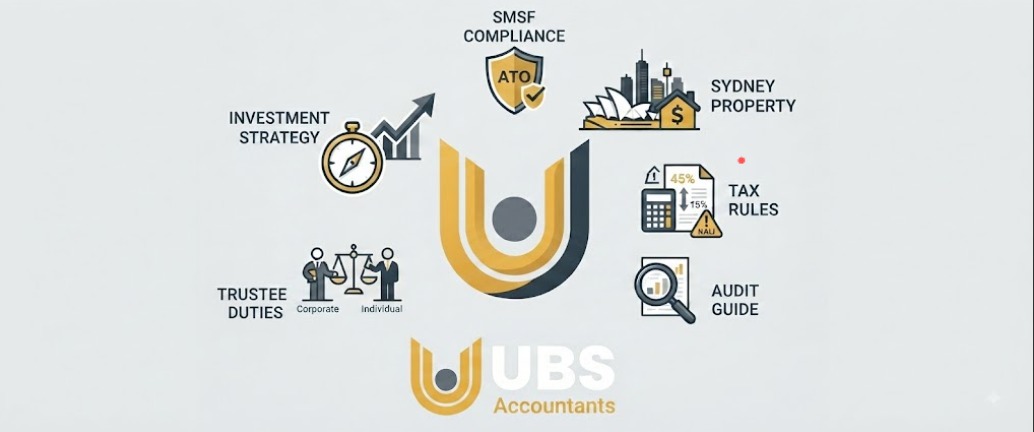
Navigating Self Managed Superannuation Funds requires strict adherence to regulatory guidelines. This comprehensive guide explores smsf compliance rules australia and working alongside a specialized smsf tax accountant sydney to protect your retirement wealth.
SMSF Compliance & Tax Rules
Setting up and running a Self-Managed Super Fund offers control over your financial destiny, particularly for trustees maximizing sydney investment property tax deductionsthrough real estate assets.
Setting up and running a Self-Managed Super Fund (SMSF) offers unmatched control over your financial destiny, particularly for investors targeting Sydney property investment. However, with great autonomy comes profound accountability. The Australian Taxation Office (ATO), guided by oversight frameworks from the ASIC and strategic insights from the ATO Superannuation Director, actively monitors how funds manage assets, lodgments, and related-party transactions. Failing to maintain strict compliance can shift your fund’s regulatory status, triggering harsh financial penalties or disqualifying your fund entirely.
For a foundational breakdown of how to structure your fund correctly from day one, review this resource on self managed super fund setup sydney. Furthermore, you can explore specialized fund structuring strategies by visiting UBS Accountants SMSF Services.
Understanding the Regulatory Burden in New South Wales
Sydney investors face a unique economic climate where property values, commercial leasing opportunities, and residential developments form the backbone of many aggressive wealth-accumulation strategies. Because real estate is heavily regulated within superannuation laws, trustees must be exceptionally diligent. Every single decision made regarding property acquisition, tenant selection, and loan servicing must directly align with the sole purpose test—meaning the fund is maintained solely for the provision of retirement benefits for its members.
Self-employed contractors and trade business owners accumulating wealth through super must combine asset protection with construction tax accounting and advisory tailored to high-risk industries.
Corporate Trustee vs Individual Trustee: Making the Right Structural Choice
One of the earliest and most critical decisions you will face during the initial setup phase is choosing your fund’s legal operating vehicle. The structure you select impacts asset protection, operational administration, bank account management, and penalty liabilities.
- Individual Trustees: In this arrangement, every individual member of the fund acts as a trustee, and all fund assets must be formally held in the names of those individuals as trustees. While this structure avoids setup fees and ongoing annual review charges levied by corporate regulators, it offers significantly less legal protection. Furthermore, changing members such as when a child is added or a departing member leaves requires costly and time consuming changes to property title deeds and bank accounts.
- Corporate Trustee: A proprietary limited (Pty Ltd) company acts as the dedicated trustee for the super fund, and each fund member is a director of that company. This structure offers superior asset protection, clearer ownership separation between personal assets and super assets, and smoother administration when dealing with third party lenders for property acquisitions. Even though it incurs a small annual corporate review fee, most sophisticated investors prefer this route for its long term resilience and compliance safety.
Selecting a Pty Ltd company as your fund’s legal entity aligns closely with broader decisions around business structure selection for asset protection when managing commercial risk.
Core SMSF Investment Strategy Rules
Under the Superannuation Industry (Supervision) (SIS) Act, every SMSF trustee is legally obligated to formulate, implement, and regularly review a thoroughly documented smsf investment strategy rules framework. Your investment strategy cannot simply be a generic template downloaded from the internet; it must explicitly and realistically reflect the members’ risk tolerance, diversification needs, liquidity requirements, and overall capacity to pay anticipated liabilities, taxes, and pensions.
When purchasing residential or commercial real estate in New South Wales through your fund, your written investment strategy must account for cash flow reserves. Trustees must ensure they have sufficient liquidity to cover property maintenance, council rates, insurance premiums, and commercial loan repayments without forcing a fire sale of core fund assets during economic downturns.
Maintaining real-time oversight of fund transactions and liquid reserves becomes seamless when leveraging integrated Xero cloud bookkeeping setupfor bank feeds and financial reporting.
Key Elements Every Strategy Must Address
- Risk and Return: The expected return of the fund’s investments must meet the retirement objectives of all members.
- Diversification: The level of risk associated with holding inadequate asset classes (such as putting 100% of the fund into a single residential property) must be justified.
- Liquidity: The ability of the fund to pay member benefits and other liabilities as they fall due.
- Insurance: Whether the trustees should hold life, total, and permanent disability (TPD) insurance policies for fund members.
The SMSF Annual Audit Workflow Breakdown
An independent audit is a non negotiable yearly legal requirement for every operational super fund in Australia. According to the official ato smsf audit guide, your fund must undergo a dual faceted audit process every single financial year before lodging its annual tax return.
1. The Financial Audit
The approved auditor thoroughly examines your fund’s financial statements, profit and loss reports, operating statements, and member balance sheets to ensure they reflect a true and fair view of the fund’s financial position. They reconcile bank accounts, check contribution caps, and verify pension payment thresholds.
2. The Compliance Audit
The auditor checks whether the trustees have operated the fund in accordance with superannuation laws. This includes verifying the sole purpose test, reviewing the investment strategy, checking that assets are held in the correct trustee names, and examining any related party dealings.
Balancing fund administration with standard business operations requires tracking all allowable claims against income, much like utilizing a thorough small business tax return deductions checklistduring annual lodgments.
The 4-Step Annual Audit Workflow
- Step 1: Pre Audit Preparation: Gathering all bank statements, contract notes, minutes of meetings, invoices, and lease agreements.
- Step 2: Valuation Verification: Ensuring every asset particularly unlisted shares and real estate holdings is logged at true market value backed by objective evidence.
- Step 3: Appointment Deadline: Appointing an approved, independent SMSF auditor at least 45 days before your annual return lodgment due date.
- Step 4: Auditor Review & Reporting: The auditor tests for breaches; if severe statutory violations occur, an Auditor/Actuary Contravention Report (ACR) is lodged directly with the ATO.
For deeper insights into localized fund administration and professional oversight, read more onUBS Accountants Sydney SMSF Guidance.
Annual Compliance Calendar for Trustees
Fund members who are also company directors must sync superannuation contribution cutoffs with their standard PAYG withholding tax employer obligations before quarterly deadlines.
Staying ahead of key regulatory dates prevents costly administrative penalties and preserves your fund’s complying status on the official ATO Super Fund Lookup database:
| Date / Milestone | Compliance Requirement |
| 31 October | Standard lodgment deadline for new SMSFs and self-lodgers |
| At least 45 days prior | Appointment of an independent approved SMSF auditor |
| 28 February / 15 May | Extended lodgment deadlines when utilizing a registered tax agent |
| Ongoing (30 June cutoff) | Final clearance date for all member contributions and pension drawdowns |
Managing compliance audits, real estate liquidity, and complex tax caps demands professional oversight. To discuss your fund’s specific tax positioning or structure optimization, you canschedule a consultation with our expert team.
Conclusion
Running a self managed super fund is an exceptionally effective vehicle for taking direct control of your financial future, but navigating changing tax legislation, NALI provisions, and annual audit workflows requires constant vigilance. By working with qualified professionals and adhering to strict governance, you can safely build long term wealth. Visit UBS Accountantsto learn more about comprehensive tax and advisory solutions.
Integrating your fund’s growth targets into a broader commercial expansion strategy often benefits from fractional Virtual CFO advisory services to manage long-term capital allocation.